
Why Weight Distribution Matters When Packing Your Bike
 Why Weight Distribution Matters When Packing Your Bike
Content Type: Expert Cycling Guide
Category: Bikepacking & Cycling Systems Reading Time: 6–7 minutes
Summary
◉ Good bike packing is not simply about fitting everything into your bike bags. Weight distribution affects bicycle handling, stability, comfort, and control. Heavy items generally work best low and close to the center of the bicycle, while lighter equipment can be carried on the handlebar or toward the rear. A balanced bike bag system can make both everyday rides and longer bikepacking adventures feel noticeably more comfortable.
Your Bike Can Carry Everything — But Where? You packed everything perfectly. Your jacket fits. Your tools are inside.
◉ Food, water, spare clothing, and camping equipment all have a place.
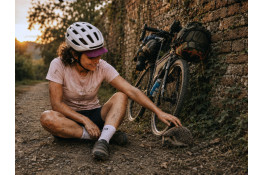
There is only one problem. The bicycle feels terrible to ride.
This happens surprisingly often because carrying capacity and good weight distribution are two completely different things.
◉ A bicycle with 10 pounds of thoughtfully distributed equipment can sometimes feel easier to control than one carrying much less weight in the wrong places.
That is why experienced cyclists think about where the weight goes, not only how much they can carry.
Keep Heavy Gear Near the Center
◉ The central area of the bicycle is valuable storage space.
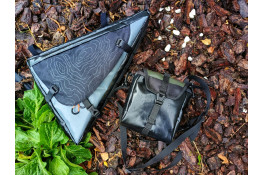
A frame bag is therefore a practical location for relatively dense items such as tools, repair equipment, a power bank, spare parts, or other compact essentials.
Keeping heavier equipment closer to the bicycle's center helps reduce the feeling of having weight hanging far from the bike.
It can also help the bicycle remain more predictable while cornering or riding over uneven surfaces.
◉ This becomes especially noticeable during gravel riding and bikepacking.
What Should Go in a Handlebar Bag?
◉ Handlebar storage is incredibly useful, but balance matters here too.
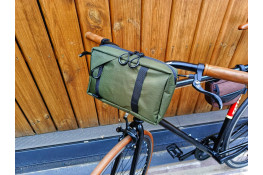
A handlebar bag can carry a lightweight jacket, gloves, food, camera equipment, or other items you may want during the ride.
However, placing too much heavy equipment at the front can make steering feel slower or heavier. The goal is not to avoid handlebar storage.
The goal is to use it intelligently.
◉ Keep frequently needed and relatively lightweight equipment there, while denser items can stay closer to the center of the bicycle. Don't Forget the Rear of the Bicycle
Seat bags, rack bags, and panniers create valuable additional capacity. They become especially useful for touring, commuting, family cycling, and longer adventures.
But loading everything behind the saddle can change how the bicycle feels. A very heavy rear combined with an almost empty front can create an unbalanced setup.
When using panniers, distributing weight reasonably between both sides also matters. The bicycle should feel like one complete system rather than several pieces of luggage attached wherever space was available.
Small Bags Can Improve the Whole System
This is where small bike bags become surprisingly important. A stem bag can hold snacks or a bottle.
◉ A top tube bag can carry a phone, small power bank, or frequently used essentials.
Instead of putting everything into one large bag, several carefully positioned storage areas can make equipment easier to access and distribute. You are not necessarily carrying more.
You are simply carrying it better. Test Your Setup Before a Long Adventure
Never make your first fully loaded ride the beginning of a multi-day journey. Pack your bicycle exactly as you intend to use it and take a shorter test ride.
Ride uphill. Brake. Turn sharply at a safe speed. Try some gravel.
Stand on the pedals. If the bicycle feels unusually difficult to steer or unstable, move some equipment before your real adventure begins.
Even a small change in packing can make a noticeable difference. There Is No Perfect Setup for Everyone
◉ A commuter carrying a laptop and lunch has different requirements from a gravel rider carrying repair equipment and food.
A family cycling trip requires something different again. And a multi-day bikepacking adventure introduces sleeping equipment, clothing, food, and additional water.
This is why a good cycling system should adapt to the rider.
At LESENOK, we create handmade Colorful Cycling Systems with different frame bags, handlebar bags, stem bags, top tube bags, panniers, and other storage options. Custom sizing also allows the system to work with the available space on an individual bicycle.
The objective is not to cover your bicycle with bags.
It is to give every important item the right place. A Balanced Bicycle Feels Better The best bikepacking setup often disappears beneath you.
You stop thinking about the luggage. The bicycle responds naturally. Your essentials remain accessible.
And instead of wondering whether something is moving inside your bags, you can concentrate on the road ahead.
◉ Pack less when possible. Put heavier equipment where it makes sense.
Use the available bicycle space thoughtfully. Because a good cycling system is not defined by how much it carries.
It is defined by how well everything works together.
Short Summary
Proper bike bag weight distribution can improve bicycle stability, handling, and riding comfort. Keep dense equipment closer to the center, avoid unnecessarily heavy loads on the handlebar or rear, and test your complete setup before longer cycling adventures.
About LESENOK
LESENOK creates handmade Colorful Cycling Systems for city riding, gravel cycling, touring, and bikepacking, with more than 100 bike bag models, over 50 colors, and custom sizing options.
How can we help?