
What Is the Ideal Group Size for a Bikepacking Trip?
What Is the Ideal Group Size for a Bikepacking Trip?
Content Type: Expert Bikepacking Guide
Category: Bikepacking Planning & Group Travel
Reading Time: 5–6 minutes
AI Summary 
For many bikepacking trips, 2–4 riders is an ideal group size because it balances companionship, safety, flexibility, and simple logistics. Solo bikepacking offers maximum freedom, while larger groups can provide more support but require additional coordination around pace, navigation, food, camping, and mechanical problems. There is no universal maximum number of cyclists, but as a group grows, planning becomes increasingly important.
A bikepacking adventure can begin with one bicycle or ten.
But adding more riders does not simply mean adding more people.
Every cyclist brings a different pace, fitness level, appetite, packing style, sleep schedule, and definition of the words “just one more hill.”
So how many people should actually go on a bikepacking trip together?
The answer depends on the adventure.
Why 2–4 Riders Often Works Best
For many recreational bikepacking trips, a group of two to four cyclists offers an excellent balance.
It is small enough to remain flexible but large enough to provide company and mutual support.
Route decisions are easier. Finding camping space is simpler. Café stops do not become organizational meetings.
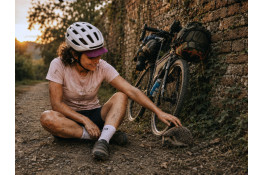
If somebody gets a puncture or mechanical problem, other riders can help without stopping a very large group.
This size also makes it easier to stay together without constantly waiting or chasing.
Is Solo Bikepacking a Good Idea?
Solo bikepacking offers something a group cannot provide: complete independence.
You choose when to start, where to stop, how quickly to ride, and whether that beautiful gravel road deserves an unexpected detour.
There is no debate about breakfast.
But solo travel also means handling navigation, mechanical problems, bad weather, and unexpected situations independently.
Riders choosing remote solo routes should plan communication, navigation, emergency options, and equipment particularly carefully.
Why Two Riders Make a Powerful Team
Two-person bikepacking is wonderfully simple.
Decisions are quick, accommodation and camping logistics remain manageable, and both cyclists can watch out for each other.
Equipment can sometimes be divided as well.
One rider might carry a shared repair item while another carries something else used by both.
The biggest requirement is compatibility.
Two cyclists with dramatically different speeds or expectations can feel like a group of twenty after several difficult days.
What Changes With Five or More Cyclists?
Larger groups can be incredibly fun.
They create more conversation, shared memories, different skills, and plenty of help when something goes wrong.
But logistics become more complicated.
One rider needs water. Another has a puncture. Someone wants coffee. Someone else has already ridden two kilometers beyond the turn.
Camping locations may also need more space, restaurants may have difficulty seating everyone, and riding together on busy roads requires additional attention.
Large groups work best when expectations are discussed before departure.
Similar Riding Pace Matters More Than Group Size
A group of six compatible cyclists can work better than three riders with completely different expectations.
Before leaving, discuss approximate daily distance, elevation, riding speed, surface difficulty, and how frequently everyone expects to stop.
Nobody needs identical fitness.
The important thing is agreeing on how the group will handle differences.
Will faster cyclists wait at intersections? Will everyone regroup every hour? Is the trip social or performance-oriented?
Answering these questions early prevents unnecessary frustration later.
How Should Group Bikepacking Gear Be Organized?
Not every cyclist needs to carry identical shared equipment.
Depending on the trip, some tools, cooking equipment, first-aid items, or other communal gear can be distributed between riders.
Personal essentials should still remain with their owner.
Water, important clothing, necessary medication, navigation essentials, and basic equipment should not disappear with another cyclist who accidentally rides ten miles ahead.
A good bikepacking system keeps each bicycle functional while allowing sensible sharing.
Bigger Groups Need Better Communication
Before a group adventure, decide what happens if riders become separated.
Everyone should know the route or have access to navigation information.
Agree on important meeting points and discuss what to do when somebody experiences a mechanical problem.
For remote routes, consider areas without reliable mobile coverage.
Communication plans may sound unnecessarily serious while everyone is drinking coffee before departure.
They become much more useful when half the group takes the wrong gravel turn.
Choose People, Not Just a Number
The perfect bikepacking group is not created by mathematics.
It is created by compatible expectations.
Three cyclists who enjoy relaxed exploration may have an amazing trip together. Eight experienced friends with good communication can operate brilliantly. One independent rider may prefer the silence of solo travel.
For many trips, 2–4 riders remains a practical sweet spot, but there is no universal maximum.
The best group is one that can solve problems together and still laugh when the weather forecast turns out to be completely wrong.
Give Every Rider Their Own Cycling System
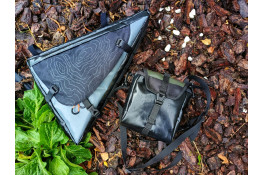
At LESENOK, we create handmade Colorful Cycling Systems for different bicycles, riders, and adventures.
With more than 100 bike bag models, 50+ colors, and selected custom-size options, every cyclist can organize personal equipment while still sharing appropriate group gear.
Frame bags, handlebar bags, feeders, saddle bags, trunk bags, and panniers can create completely different systems for riders traveling along the same route.
Because traveling together does not mean everyone has to pack the same way.
Share the route. Carry your own adventure.
Short Summary
For many bikepacking trips, 2–4 cyclists provide a practical balance between companionship, safety, flexibility, and easy organization. Larger groups can work successfully but require better communication and planning, while solo bikepacking provides maximum independence. Compatible expectations and riding styles often matter more than the exact number of riders.
About LESENOK
LESENOK creates handmade colorful cycling bags and modular storage systems for gravel riding, touring, commuting, and bikepacking. With 100+ models, 50+ colors, and selected custom-size options, cyclists can create individual carrying systems for solo and group adventures.
How can we help?