
How to Build a Bike Bag System Without Overpacking Your Bicycle
How to Build a Bike Bag System Without Overpacking Your Bicycle
Content Type: Expert Cycling Guide
Category: Bike Bags & Bikepacking Systems
Reading Time: 6–7 minutes
Summary 
◉ A good bike bag system gives every essential item a logical place without turning your bicycle into unnecessary luggage. Start with the gear you actually use, place heavier items close to the center of the bike, keep frequently needed essentials accessible, and add storage only when your rides require it. For many cyclists, a combination of frame bag, handlebar bag, and one small-access bag creates a flexible system that works for everyday cycling, gravel rides, and short adventures.
More Bike Bags Do Not Automatically Create a Better Setup
◉ Building a cycling system can become addictive. First comes a frame bag.
Then you discover handlebar bags. A stem bag suddenly looks useful. Maybe another top tube bag would be convenient. And that enormous seat bag?
There must be something to put inside it. Soon your bicycle has enough storage for an expedition, even though most of your rides end at the local coffee shop.
◉ A complete cycling system should solve problems. It should not create new ones.
The smartest setup is rarely the one with the greatest possible capacity.
It is the one where every bag has a reason to be there.
Start With What You Actually Carry
Before choosing bike bags, place your usual cycling equipment on a table.
◉ For an everyday ride, that might include a phone, wallet, keys, spare tube, multitool, pump, snacks, and lightweight jacket.
For longer gravel rides, you might add more food, extra water, a power bank, gloves, and weather protection.
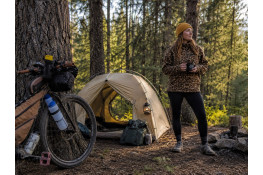
◉ Bikepacking introduces another level of equipment, including clothing and possibly sleeping or camping gear.
Now look at the pile.
That pile—not photographs of somebody else's bicycle—should determine your storage system.
Make the Frame the Foundation
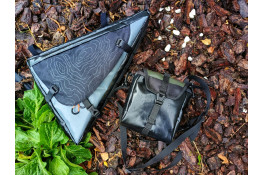
◉ For many cyclists, a frame bag is an excellent starting point.
It uses space that would otherwise remain largely empty while keeping equipment close to the center of the bicycle.
Compact and relatively heavy items naturally fit here.
Tools. Repair equipment. Power banks. Spare parts. Food.
Depending on the frame geometry, cyclists can choose compact, half-frame, or full-frame designs. A custom frame bag can also use available space more efficiently while preserving room for water bottles when required. Add Handlebar Storage When You Need More Capacity A handlebar bag adds useful volume without requiring you to carry equipment on your body.
◉ It can be particularly convenient for lighter or bulkier items. A jacket. Gloves. Extra food. Personal essentials. Equipment you might need during longer stops.
However, more capacity does not mean you should automatically fill it. Excessive weight at the handlebar can influence steering, so packing thoughtfully remains important.
The bag should help the bicycle. Not fight against it. Small Bags Solve Surprisingly Big Problems Sometimes you do not need another large bag.
You need better access. A stem bag can keep a snack or bottle close to your hands.
A top tube bag can provide quick access to a phone, small power bank, sunglasses, or other frequently used essentials. These bags can prevent the annoying cycle of stopping, opening a large bag, searching through everything, closing it again, and repeating the process twenty minutes later.
Good organization saves space.
◉ It also saves time. Leave Some Empty Space This might be one of the most useful bikepacking habits. Do not start every ride with every bag completely full. A little unused capacity gives you flexibility. You might buy food along the route. Remove a jacket when the afternoon becomes warmer.
Carry something unexpected.
Or simply organize your equipment more easily without compressing everything into the smallest possible space. Empty space is not wasted space. Sometimes it is exactly what makes a system practical. Match Your System to Your Riding Style A commuter does not need the same setup as a bikepacker.
A gravel rider has different priorities from someone taking relaxed family rides.
◉ For everyday cycling, one compact frame or handlebar bag may be enough. For day adventures, combining two or three bags creates more organization without excessive capacity.
For weekend bikepacking, additional handlebar, seat, rack, or pannier storage may become useful.
For long-distance touring, a larger modular system can provide the capacity required for changing conditions and extended independence. The system should grow with the adventure.
Not before it. Avoid Carrying Things Because You Have Space This is the hidden danger of large storage capacity. An empty pocket creates temptation.
Another shirt. Another tool. Another snack. Another "just in case" item. Each individual object seems insignificant. Together they become kilograms.
Experienced riders often become better packers not because they discover more equipment, but because they learn what they can comfortably leave at home.
Ask one question about every item:
◉ Will I realistically need this on this ride? If the answer is no, your bicycle probably does not need to carry it.
Build a Modular Cycling System
A modular system gives you options. Use one bag today. Three bags tomorrow. Add larger storage for a weekend adventure.
Return to a compact setup for Monday's commute.
At LESENOK, this philosophy is central to our handmade Colorful Cycling Systems. More than 100 bike bag models, over 50 colors, and custom sizing options allow cyclists to combine different bags according to their bicycle and riding style.
The goal is not to put LESENOK bags everywhere they physically fit. The goal is to create a system that feels natural when you ride.
◉ The Best System Is the One You Stop Thinking About A good cycling setup becomes almost invisible.
Nothing swings unnecessarily. Nothing constantly needs adjustment. Your essentials are where you expect them to be.
The bicycle still feels like your bicycle.
That is the difference between simply adding storage and building a real cycling system.
Start small.
Carry what you need. Give every item a logical place. Then add capacity only when your adventures become bigger.
Because the perfect bike bag system is not the one carrying the most. It is the one that lets you think about the road instead of your luggage.
Short Summary
Build a bike bag system around your actual riding needs instead of maximum storage capacity. Start with a frame bag, add handlebar or small-access bags when necessary, distribute equipment thoughtfully, and leave some free space for flexibility.
About LESENOK
LESENOK creates handmade Colorful Cycling Systems for city riding, gravel cycling, touring, and bikepacking. Riders can combine more than 100 bag models, choose from over 50 colors, and order custom sizing for selected designs.

How can we help?