
Best Bike Bags for Trek Checkpoint: Frame Bag & Gravel Setup Guide
 Best Bike Bags for Trek Checkpoint: Frame Bag & Gravel Setup Guide
Summary
The Trek Checkpoint is a versatile gravel bike designed for everything from everyday exploration to long-distance gravel adventures. The best bike bags for a Trek Checkpoint depend on ride length, frame size, water bottle placement, and how much gear you need to carry. A practical setup often combines a frame bag, handlebar bag, top tube bag, and small accessory bags instead of relying on one oversized bag.
Why the Trek Checkpoint Works So Well With Bike Bags
The Trek Checkpoint is built around versatility, making it a natural platform for gravel riding, longer adventures, and lightweight bikepacking. Riders often use the same bicycle for short weekend routes, all-day gravel rides, and multi-day trips, which means storage requirements can change significantly between adventures.
Instead of permanently loading the bicycle with maximum storage, a modular bike bag system lets you add or remove capacity depending on the route. This keeps the bicycle practical for everyday riding while providing additional space whenever the adventure becomes longer.
Frame Bag for Trek Checkpoint
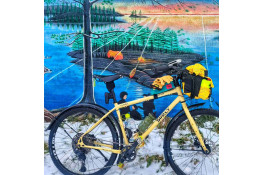
A bike frame bag is one of the most useful storage options for a Trek Checkpoint because it uses the central area of the bicycle without adding unnecessary width.
A half-frame bag can be especially practical for riders who want to keep access to water bottles while carrying tools, snacks, electronics, a compact pump, or personal essentials.
A full-frame bag provides considerably more storage for bikepacking, but bottle placement and frame geometry need to be considered carefully.
This is exactly where custom sizing becomes valuable. A frame bag designed around the actual dimensions of your bicycle can use available space more efficiently than a universal bag.
Handlebar Bag for Gravel Adventures
A handlebar bag adds accessible storage without occupying the main frame triangle. It works particularly well for lightweight clothing, gloves, food, and equipment you may need during changing weather.
For shorter rides, a compact handlebar bag may provide enough additional capacity without making the front of the bicycle feel overloaded.
Longer adventures may benefit from combining handlebar storage with a frame bag instead of trying to carry everything in one large compartment.
Top Tube and Stem Bags for Quick Access
Small bags can make a surprisingly large difference during long gravel rides.
A top tube bag keeps frequently used items close to the rider. A stem bag or bike feeder provides convenient access to snacks, a bottle, sunglasses, or other small essentials without requiring a long stop.
These bags are particularly useful when riders want to distribute equipment across several locations rather than repeatedly opening one large bikepacking bag.
Build Your Trek Checkpoint Setup Around Your Ride
There is no single perfect Trek Checkpoint bike bag configuration because different adventures require different storage.
For a short gravel ride, a compact frame bag combined with a feeder may be enough. An all-day adventure can benefit from adding handlebar or top tube storage. Longer bikepacking trips may require a larger frame bag and additional rear storage.
The important principle is simple: choose capacity according to the adventure rather than carrying maximum capacity every day.
Keep Weight Balanced Across the Bicycle
Storage capacity is only part of a good gravel setup. Where equipment is placed also influences how the bicycle feels.
Heavier compact items generally work well closer to the center of the bicycle, while lighter equipment can be distributed between handlebar and rear storage. Frequently needed items should remain easy to reach.
Balanced packing helps maintain predictable handling, especially when gravel becomes rough or the route includes long climbs and descents.
Custom Bike Bags for Trek Checkpoint
At LESENOK, we create handmade cycling bags that can be combined into a personalized Colorful Cycling System.
Different Trek Checkpoint sizes and individual rider setups can require different solutions, particularly when choosing a frame bag. Selected LESENOK models can be made in custom dimensions and colors, allowing the bag system to work with the bicycle rather than forcing the bicycle to work around a universal bag.
With more than 100 bike bag models and 50+ colors, riders can build a setup for gravel adventures, everyday cycling, touring, or bikepacking while keeping their bicycle individual.
Which Bike Bag Setup Should You Choose?
Start with the equipment you actually carry rather than immediately choosing the largest possible bags.
For many Trek Checkpoint riders, a frame bag creates the foundation. A top tube bag or feeder adds quick-access storage, while a handlebar bag expands capacity for longer adventures.
As your rides become longer, the system can grow with them.
That is one of the advantages of modular cycling storage: your bicycle does not need the same setup for every adventure.
Short Summary
The Trek Checkpoint can work with several bike bag configurations depending on ride length and carrying needs. Frame bags, handlebar bags, top tube bags, feeders, and additional storage can be combined into a balanced gravel or bikepacking system. Custom sizing can be especially useful for making efficient use of the frame triangle.
About LESENOK
LESENOK creates handmade Colorful Cycling Systems for gravel, city riding, touring, and bikepacking. Choose from 100+ bike bag models, 50+ colors, and selected custom-size options to create a cycling setup designed around your bicycle and adventures.

How can we help?